


Project management: Dr. Alula Tesfay Asfha
Project partners: Mekelle University, Tigray Bureau of Culture and Tourism, Frobenius-Institute
Duration: December 2024 – November 2026
Funding: Gerda Henkel Foundation
The Tigray Heritagescapes Restoration Initiative is a multidisciplinary project aimed at protecting cultural heritage sites in Tigray, Ethiopia, from the impacts of conflict, environmental degradation, and modernization. This initiative combines advanced technologies such as 3D modeling, photogrammetry, and geographic information systems (GIS) with traditional conservation practices. By combining scientific assessment, restoration planning, and community collaboration, the project aims to ensure both cultural authenticity and structural resilience in its conservation efforts.
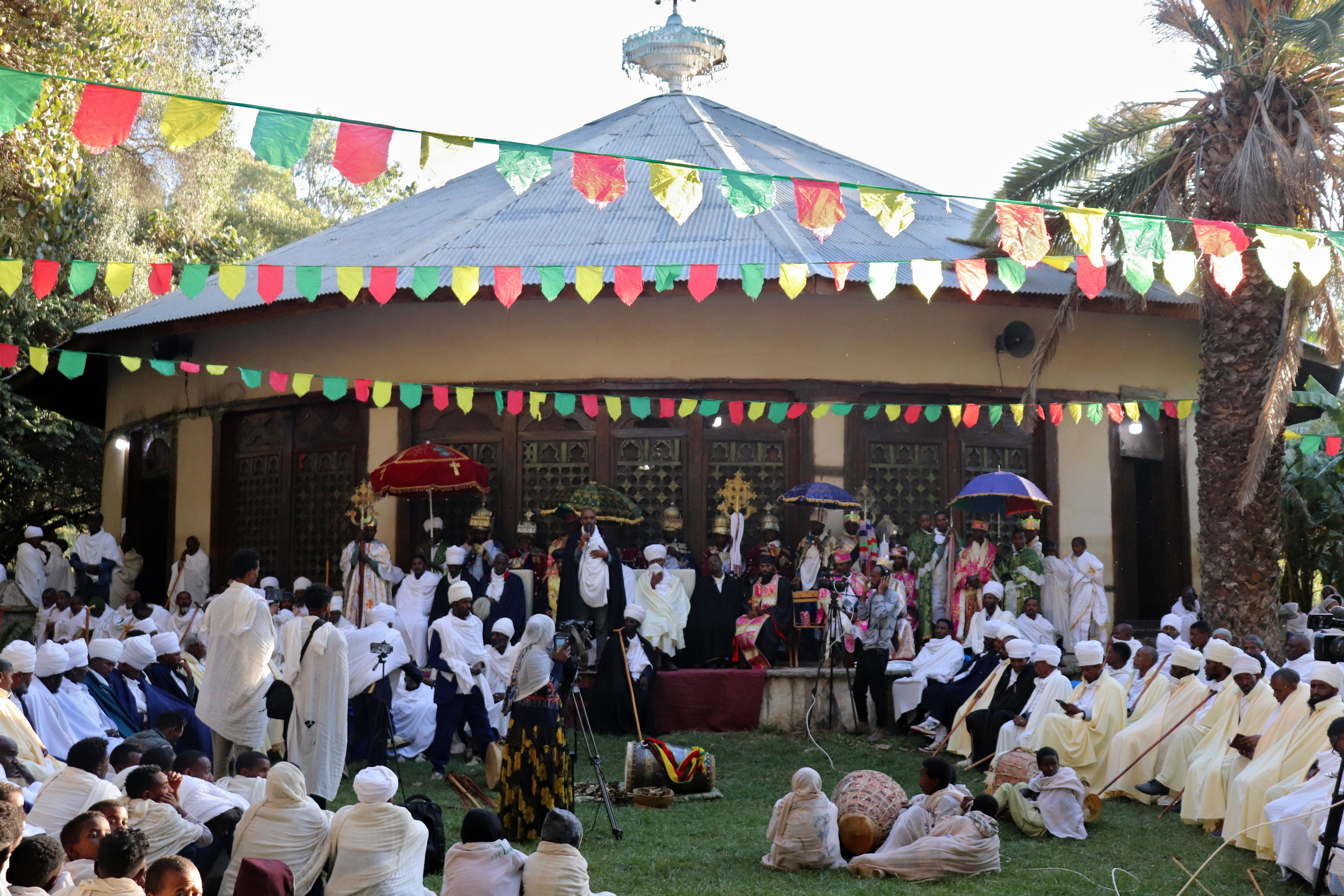
The project focuses on four key cultural heritage sites selected for their cultural and historical significance as well as their immediate need for restoration. The Nejashi cluster, known for its ancient mosque and the Amanuel Church, possesses exceptional spiritual and architectural value. Agula Town is home to landmarks such as the Palace of Emperor Yohannes and the Kidane Mihret Church, which are significant due to their historical connection to the imperial heritage. The village of Cheleqot includes the Cheleqot Sillasie Church, the ruins of the Raesi Wolde Sillasie Palace, and surrounding sites that offer insight into the region’s church and residential architecture. The village of Khuien, known for the Estifanos Church and traditional Hidmo houses, offers insights into traditional Tigrayan building techniques and community life.
Master’s students at Mekelle University are actively contributing to the project, which is supported by the MSc Thesis Support Fund. Their research covers topics such as architectural documentation, collecting oral traditions, and community engagement in the preservation and promotion of digital heritage. The students use state-of-the-art tools and interdisciplinary methods to analyze the cultural heritage clusters and propose sustainable restoration strategies.